Dragon Ball Power Levels Explained: How Scaling Actually Works
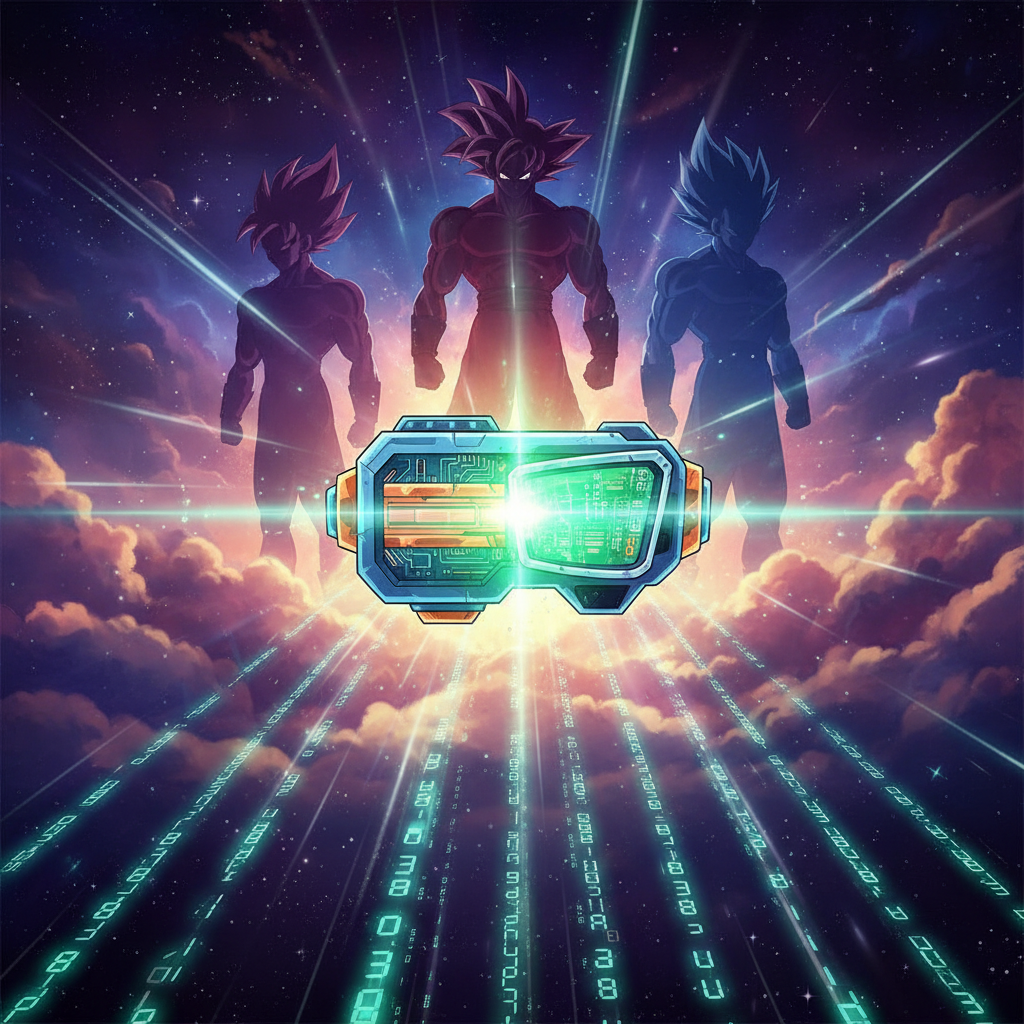
Power levels are one of the most argued, most misunderstood, and most loved mechanics in Dragon Ball. Most fans know the basics: Frieza was 530,000, Goku as a Super Saiyan multiplied his base power, and at some point the numbers just stopped showing up. But the actual mechanics of how power scaling works in Dragon Ball, and why it broke down, is a story most fans only half-know.
Here is how power scaling actually functions in the canon.
## The Original Scouter Era
In the early Saiyan and Frieza Sagas, scouters provided objective power readings. These devices measured ki output, and the numbers had real meaning:
- Raditz: 1,500
- Saibamen: 1,200 each
- Nappa: 4,000
- Vegeta (base): 18,000
- Goku (Earth-trained): 8,000
- Goku (after King Kai): 15,000
- Frieza Final Form: 530,000
The scaling was linear and consistent. A 10x increase in power level meant roughly 10x the destructive output. Fights at this stage played out roughly as the numbers predicted.
## Why Numbers Stopped Working
Two things broke the scouter system:
**1. Suppression.** Saiyans, Z Fighters, and most strong opponents learned to suppress their ki at will. A character with a power level of 1,000,000 could read as 5,000 if they suppressed properly. Scouters became unreliable.
**2. Multipliers.** Super Saiyan multiplied base power by 50x. Super Saiyan 2 was another 2x on top of that. Super Saiyan 3 was another 4x. The math compounded so fast that any objective number became meaningless within a few transformations.
By the Cell Saga, scouters were retired entirely. Toriyama himself stopped providing power level numbers.
## How Power Actually Scales
Modern Dragon Ball power scaling works on three layers:
**Layer 1: Base Power.** A character's natural strength without transformations. This grows with training and recovery (Saiyans get stronger after near-death recovery, called Zenkai boost).
**Layer 2: Transformation Multipliers.** Each form multiplies base power. The published multipliers from the Daizenshuu source material:
- Super Saiyan: 50x
- Super Saiyan Grade 2: 1.5x of SS
- Super Saiyan Grade 3: 1.5x of SS Grade 2 (with severe stamina cost)
- Full-power Super Saiyan: roughly equivalent to Grade 1 with fewer drawbacks
- Super Saiyan 2: 2x of SS
- Super Saiyan 3: 4x of SS2
- Super Saiyan God: roughly 10x of SS3 (estimates vary)
- Super Saiyan Blue: roughly 2x of SSG
- Mastered Ultra Instinct: ceiling unknown, scales with calmness
**Layer 3: Skill Modifiers.** Two characters at the same nominal power level can have wildly different combat outcomes based on technique, experience, and form mastery. Goku in mastered Super Saiyan beats Goku in Super Saiyan Grade 2 even though Grade 2 has a higher raw multiplier, because the mastered form lets him fight without strain.
This is why power level numbers stopped working. The math compounded too fast and combat outcomes depended too much on Layer 3 (skill) for raw multipliers to matter.
## God Ki and the Power Tier Reset
When Battle of Gods introduced Super Saiyan God, the franchise functionally reset its power scale. Mortal multipliers stopped being relevant. The new question was: does the character have access to god ki?
The new tiers became:
- **Mortal Tier**: Frieza Final Form, Cell, Buu, base Saiyans, Earth-trained mortals
- **Mortal-Elite Tier**: Super Saiyan 3, Frieza Golden, Cell at peak
- **God Tier**: Super Saiyan God, Super Saiyan Blue, anything using god ki
- **Elite God Tier**: Mastered Ultra Instinct, Ultra Ego, Beerus
- **Cosmic Tier**: Whis, Black Frieza, Angels
Within a tier, fights are competitive. Across tiers, the higher tier almost always wins. A Mortal Tier character cannot meaningfully harm an Elite God Tier character regardless of multipliers.
## The Black Frieza Anomaly
Black Frieza broke the established scale. Frieza, a Mortal Tier character, trained for years in a hyperbolic time chamber and emerged at Cosmic Tier, skipping the entire God Tier hierarchy.
This was not an accident. Toyotaro deliberately shattered the tier system to make the point that mortal training has no theoretical ceiling. The implication: any mortal character could, with enough time and dedication, reach Cosmic Tier without needing god ki.
This is why Black Frieza is currently the strongest mortal in canon. He represents a third path that bypasses the SS-to-God-to-UI progression entirely.
## What Power Levels Tell Us Today
Modern Dragon Ball does not use raw power level numbers. Instead, the franchise relies on:
- **Tier hierarchy** (mortal, god, elite god, cosmic)
- **Form effectiveness** (which form fits which fight)
- **Skill and experience** (the deciding factor in same-tier matches)
- **Special abilities** (Hakai, time-skip, instant transmission, etc.)
When a fan asks what is Goku's power level, there is no good answer. The honest response is: Goku exists in Elite God Tier, his ceiling depends on Ultra Instinct mastery, and his actual fighting effectiveness depends on the opponent and the situation.
## The Simple Rule
If you want a quick way to understand any Dragon Ball matchup:
1. What tier is each character in?
2. Within their tier, who has the better technique?
3. Who has stamina for the long fight?
That is enough to predict 90 percent of canon fights without needing a single power level number.
## The Bottom Line
Power levels were a great mechanic for the early arcs of Dragon Ball, but the franchise outgrew them by the Cell Saga. The current system is tier-based, with skill and form mastery doing most of the heavy lifting.
If a power-scaling debate ever feels frustrating, it is probably because someone is trying to use Layer 1 numbers to predict Layer 3 outcomes. The numbers stopped mattering decades ago. The story moved on.
ADVERTISEMENT - 728 × 90
💬 Comments (0)
No comments yet. Be the first to weigh in!